Malaysia’s National Heritage Foods: 10 Dishes Worth Tasting
In January 2025, Malaysia gazetted 117 foods as national heritage, from durian to kek lapis Sarawak. Here is what the list means, and ten dishes every visitor should try.
Malaysians argue about food the way other countries argue about football. So when the National Heritage Department published its 2025 list of heritage foods, it was more than paperwork. It was the country putting its kitchens on the record.
What are Malaysia’s national heritage foods?
Malaysia’s national heritage foods are traditional dishes officially declared heritage objects under the National Heritage Act 2005. On 17 January 2025, the National Heritage Department gazetted 117 foods in 12 categories, from staple foods and cakes to drinks and fruit, up from just 10 items the year before. By mid-2026, the government reported that 213 traditional dishes had been recognised in total.
Why the list matters
Many of these dishes are disappearing. They take hours to prepare, rely on ingredients that are hard to find, or live only in the memory of older cooks. Gazetting them gives them official status, supports the small traders who still make them, and gives younger Malaysians, and visitors, a reason to look for them.
10 heritage dishes to try
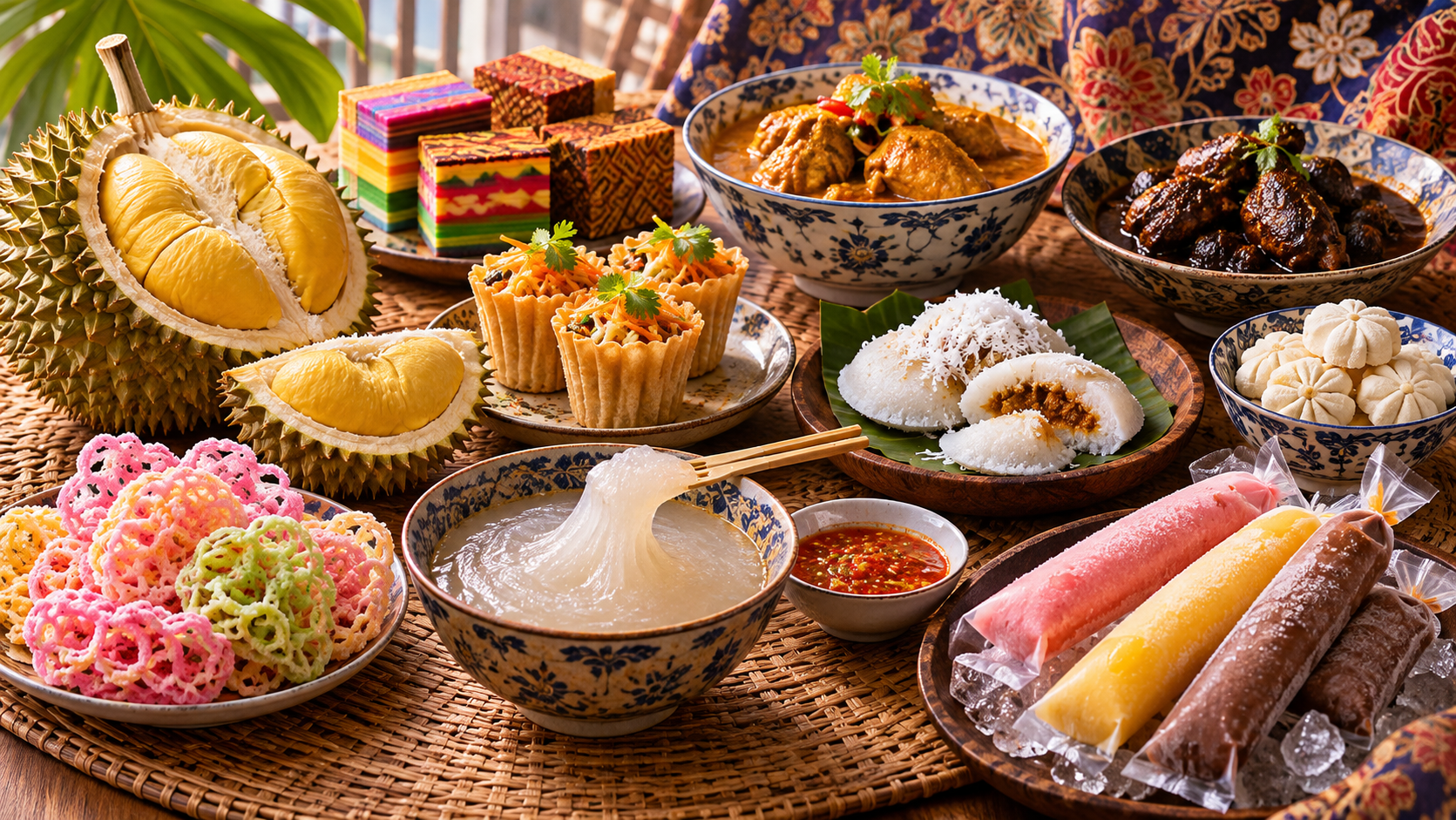
- Durian. The only fruit on the list, and the one Malaysians argue about most. Try it fresh at a roadside stall in season.
- Kek lapis Sarawak. Sarawak’s famous layered cakes, baked thin layer by thin layer in bold colours and patterns. They keep well, so they make a good gift.
- Kari Kapitan. A rich Nyonya chicken curry, a Penang and Melaka classic.
- Ayam masak buah keluak. A Peranakan chicken dish cooked with the black keluak nut, earthy and unforgettable.
- Pie tee. Crisp “top hat” pastry cups filled with shredded vegetables, another Nyonya favourite.
- Putu piring. Soft steamed rice cakes filled with palm sugar and served with grated coconut.
- Kuih bangkit. Melt-in-the-mouth tapioca cookies, a fixture of Chinese New Year.
- Inang-inang. Colourful crisp rice crackers from Melaka, now enjoying a revival.
- Ambuyat. A sticky sago dish from Borneo, eaten with bamboo forks and dipped in sour sauces.
- Aiskrim Malaysia. The humble frozen treat in a plastic sleeve, the taste of many Malaysian childhoods.
The list also includes everyday favourites such as capati, rojak, apam, popia, tau fu fa and pau, proof that heritage is not only about the rare.
The 12 categories
Staple food, cooked dishes, traditional cakes, appetisers, porridge, desserts, snacks, spicy sauces, soups, bread, drinks and fruit.
Where to start
For visitors, the easiest way in is through the states. Penang and Melaka are the places for Nyonya dishes like kari kapitan and pie tee. Sarawak is home to kek lapis. Sabah and Labuan are where to find ambuyat. And in Kuala Lumpur, hawker centres and kuih stalls carry many of the cakes and snacks on the list.
Frequently asked questions
How many foods are Malaysian national heritage? The 2025 gazette listed 117 foods. By 2026, a total of 213 traditional dishes had been recognised as national heritage.
Is durian a national heritage food in Malaysia? Yes. Durian was gazetted as national heritage in January 2025, the only fruit on the list.
Who decides Malaysia’s heritage foods? The National Heritage Department, under the Ministry of Tourism, Arts and Culture, declares heritage objects under the National Heritage Act 2005.